



Human Resources
—
8
min read

Give your people a voice with a tailored Xref Engage survey.
Increase retention and reduce turnover with quick employee feedback from an Xref Pulse Survey.
In the rush to fill roles, many organisations rely on a static, "one size fits all" reference template. While this standardisation offers speed, it creates a dangerous blind spot. When every referee is asked the exact same list of questions, you receive "tick-box" answers that fail to reveal the true candidate.
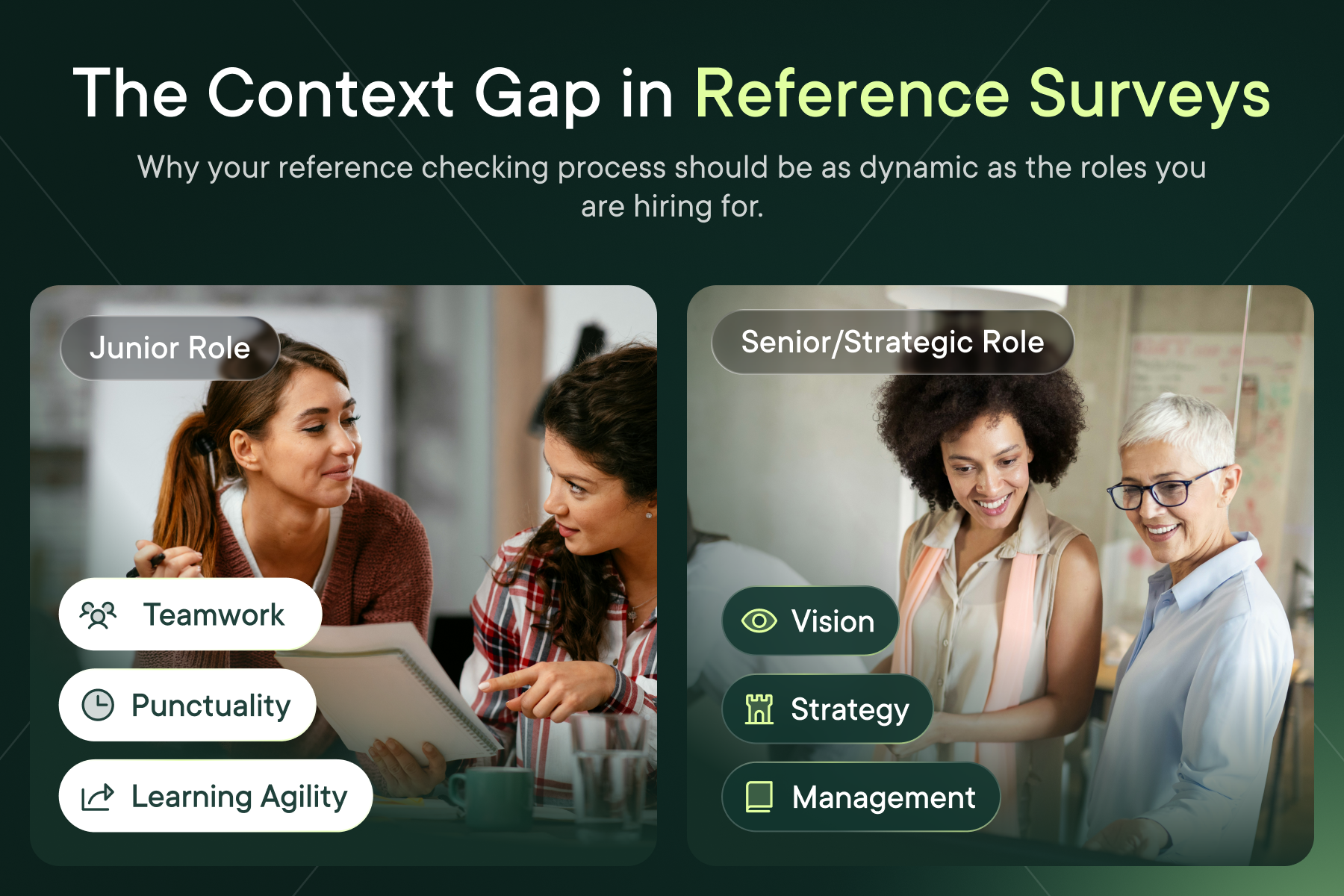
This approach ignores the nuance of the specific role. A question about "punctuality" might be relevant for a shift worker but is wasted real estate when hiring a C-suite executive where "strategic vision" is the priority. Without variance, you risk hiring a candidate who looks good on paper but lacks the specific behavioural competencies required for your unique environment.
Your reference checking process should be as dynamic as the roles you are hiring for. A static approach assumes that every candidate, regardless of seniority or specialisation, faces the same challenges. This is simply not true.
The variance in your questions must mirror the variance in your workforce. The insights required to vet a fresh graduate are vastly different from those needed for a senior executive. Where one role prioritises potential and cultural adaptability, the other demands evidence of strategic leadership and crisis management. If your survey doesn't flex to accommodate these differences—changing based on the candidate's experience level and the specific demands of the position—you miss the nuance that actually predicts success.

The variance in your questioning strategy must mirror the variance in your roles.
If you aren't asking questions based on these different scenarios, you are hiring blind.
Xref transforms this theoretical need for variety into a practical workflow. We move beyond rigid PDFs and phone scripts by giving you a digital platform where survey customisation is the standard, not the exception.
Your Questions, Your Way:
While Xref provides a library of HR-approved best-practice questions, we know that sometimes the specific answer you need requires a specific question. Xref allows you to write and add your own custom questions directly into the survey. Whether you need to ask about a niche technical skill, a specific software proficiency, or a unique cultural fit scenario, you have the freedom to ask exactly what matters to you.
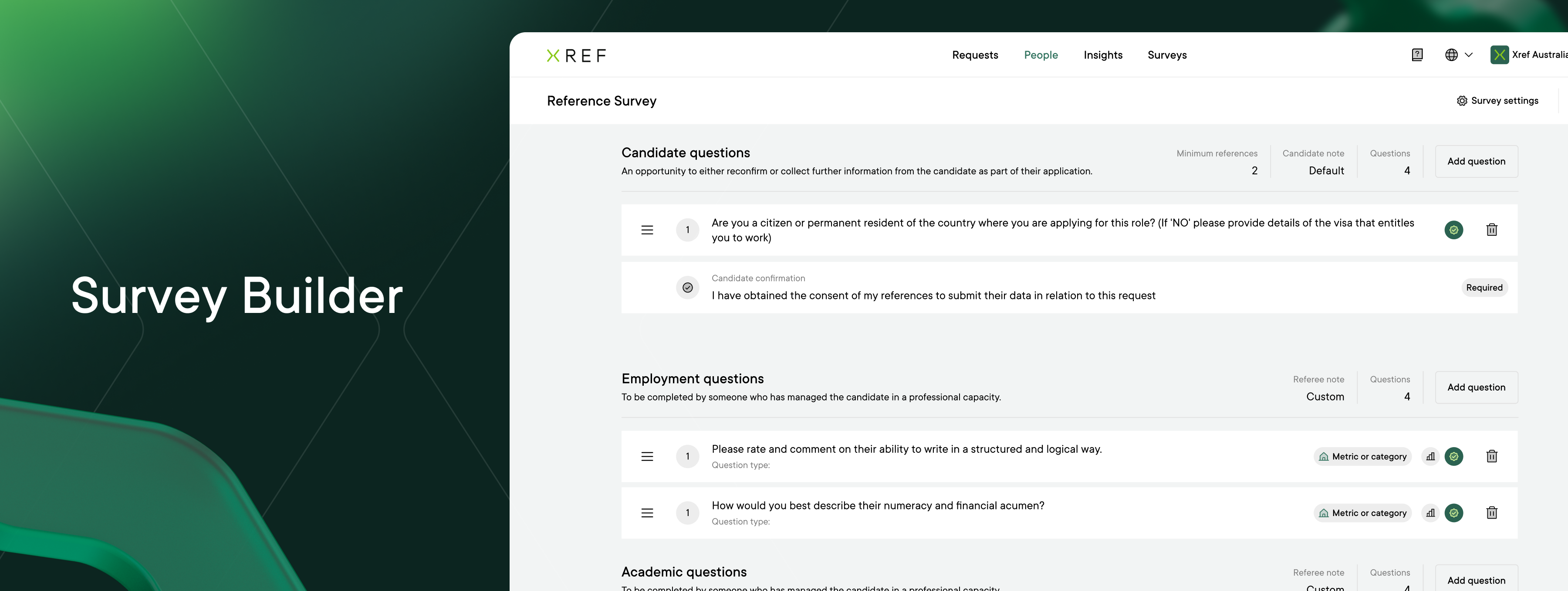
Build for the Role, Not the Process:
The Xref Template Builder allows you to construct bespoke surveys from the ground up using a mix of our bank and your own custom text. You are not locked into a generic list. You can rapidly spin up a questionnaire that targets the exact competencies required for a Senior Developer today and a Sales Director tomorrow.
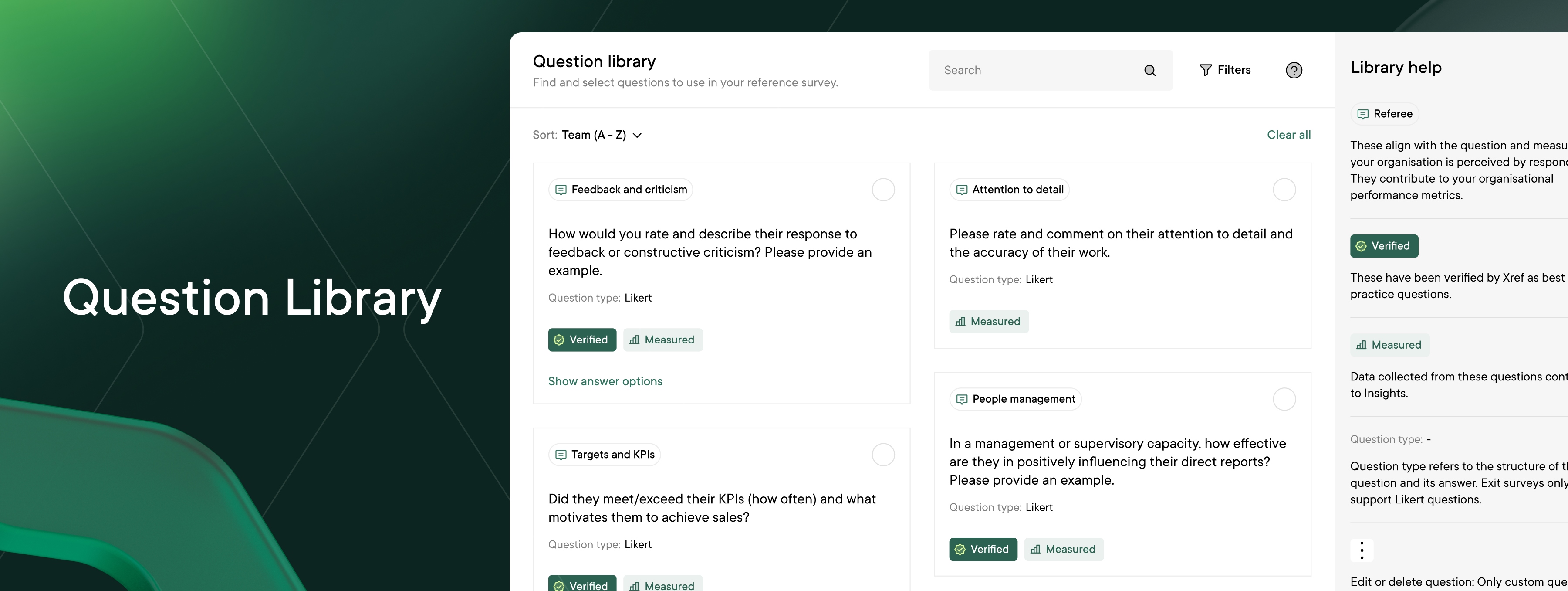
Precision Targeting:
Xref allows you to mix quantitative rating scales with qualitative open-ended questions. This means you can ask your specific, custom scenario-based questions like "How did the candidate handle the specific constraints of Project X?" and get detailed, text-based examples in return.
Effective reference checking is not just about verifying employment dates; it is about gathering actionable intelligence. By using Xref to build variance into your surveys and writing custom questions that fit the specific context, you move from simple compliance to strategic talent acquisition.
Don't just ask questions. Ask the right questions.
Request an Xref demo today.
Uncover data-driven, actionable insights with automated reference, pulse and exit surveys.