



Human Resources
—
8
min read


Give your people a voice with a tailored Xref Engage survey.
Increase retention and reduce turnover with quick employee feedback from an Xref Pulse Survey.
Every time someone leaves your organisation, you make a choice, often without realising it. You either let that relationship fade, or you keep the door open.
Boomerang hiring, the practice of re-recruiting former employees, is no longer a niche workaround. It is becoming a deliberate strategy for organisations that want to reduce time-to-hire, lower onboarding costs, and bring back people who already understand how the business works.
The challenge is that most alumni programmes are informal at best. A vague "stay in touch" at the farewell, a LinkedIn connection request, and then nothing. No structure, no data, no pipeline.
This guide walks through how to build a boomerang hiring programme that actually works, and why your exit survey is the best place to start.
A boomerang hire is a former employee who returns to your organisation after a period working elsewhere. They might have left for a career change, a competitor offer, a life event, or simply a new challenge. Now they are back, and often better for the experience.
Boomerang hiring has gained traction for practical reasons. Labour markets in Australia, New Zealand, the UK, and North America have tightened. Sourcing passive candidates is expensive. And organisations are under pressure to move faster without compromising quality.
Former employees short-circuit a lot of the usual friction. They know your culture, your processes, and your people. They have also spent time elsewhere, which typically means they bring back new skills, broader perspective, and a clearer sense of why they want to be there.
Re-hires tend to perform well, and there are structural reasons for it.
They do not need to learn the business from scratch. They understand how decisions get made, where the unwritten rules are, and how teams operate. That translates into faster productivity and lower onboarding cost.
They have also self-selected. Returning to a former employer is not a default move. Boomerang candidates have typically explored their options and made an active choice to come back. That tends to correlate with higher engagement and longer tenure.
There is also a cultural signal. When former employees return, it reinforces to the rest of the organisation that this is a place worth coming back to. That matters for employer brand.
Not every former employee is a strong re-hire candidate. The organisations getting the best results from boomerang programmes are selective, and they use exit data to guide those decisions.
The strongest predictors of a successful boomerang hire include:
The exit survey is where you begin capturing this data systematically.
Most exit surveys focus on understanding why someone left. That is useful, but it is only half the picture.
A well-designed exit survey should also capture re-hire potential: whether you would welcome this person back, under what circumstances, and what role they might return to. It should also ask the departing employee whether they are open to staying connected.
That combination, your internal assessment and the employee's own openness, gives you the foundation of a structured alumni talent pool.
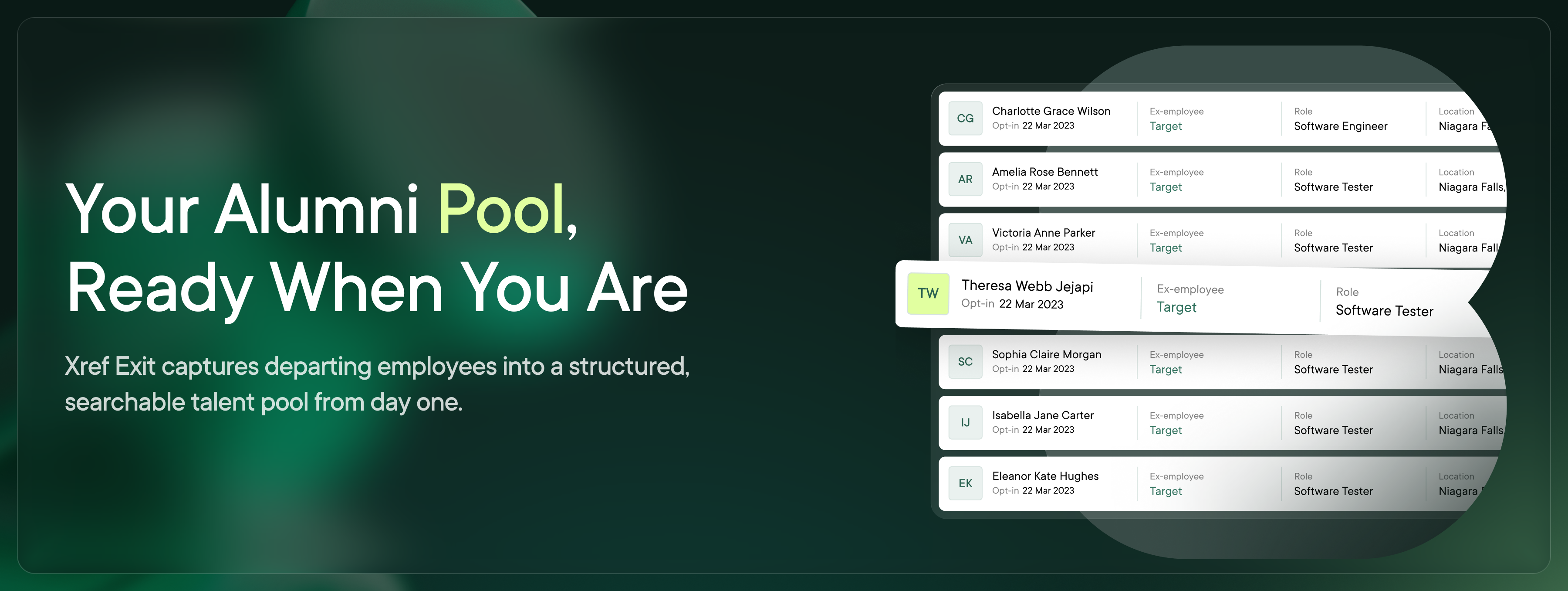
Xref Exit captures departing employees directly into an alumni talent pool at the point of offboarding. Rather than relying on informal memory or scattered spreadsheets, you end up with a structured, searchable list of former employees flagged by re-hire potential, sentiment, and role history.
This is the infrastructure most boomerang programmes are missing. Without it, alumni engagement is reactive. With it, you can be deliberate.
Building an alumni network does not require a sophisticated programme on day one. It requires consistency.
A few practical principles:
Make the exit experience positive, regardless of the circumstances.
Give former employees a reason to stay connected.
Segment your alumni pool.
Keep records current.
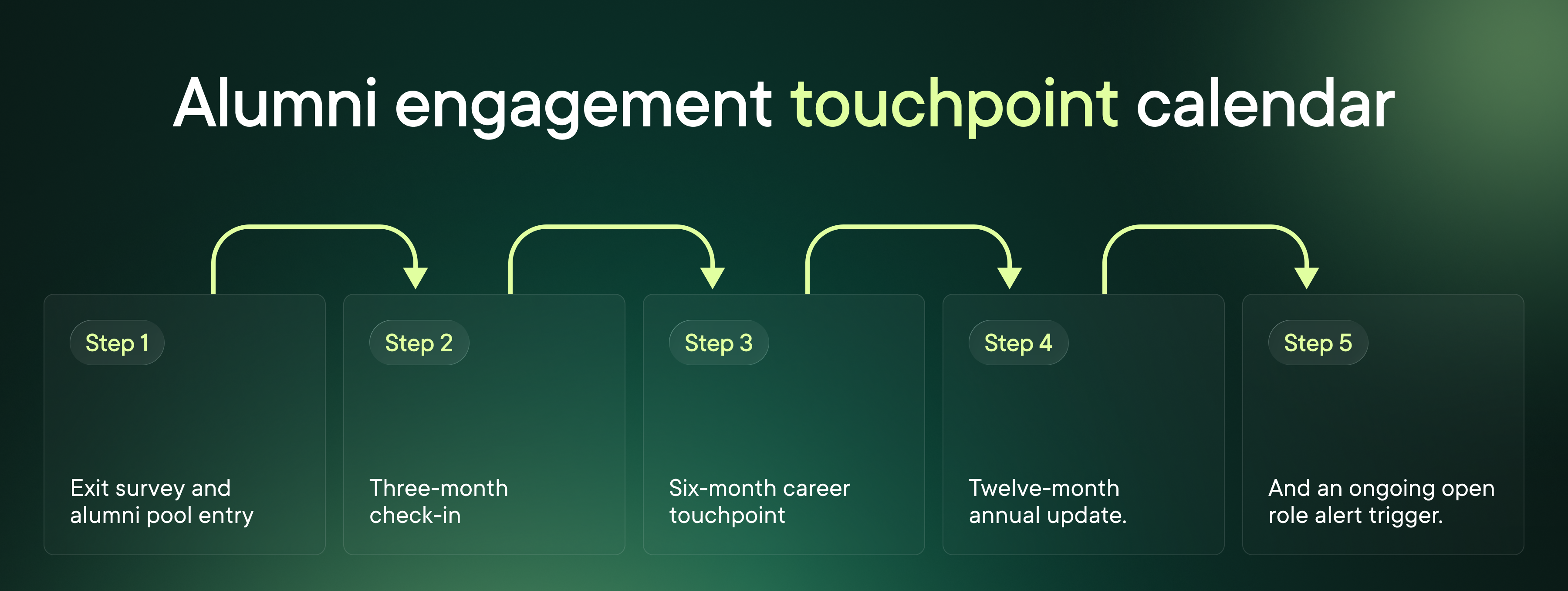
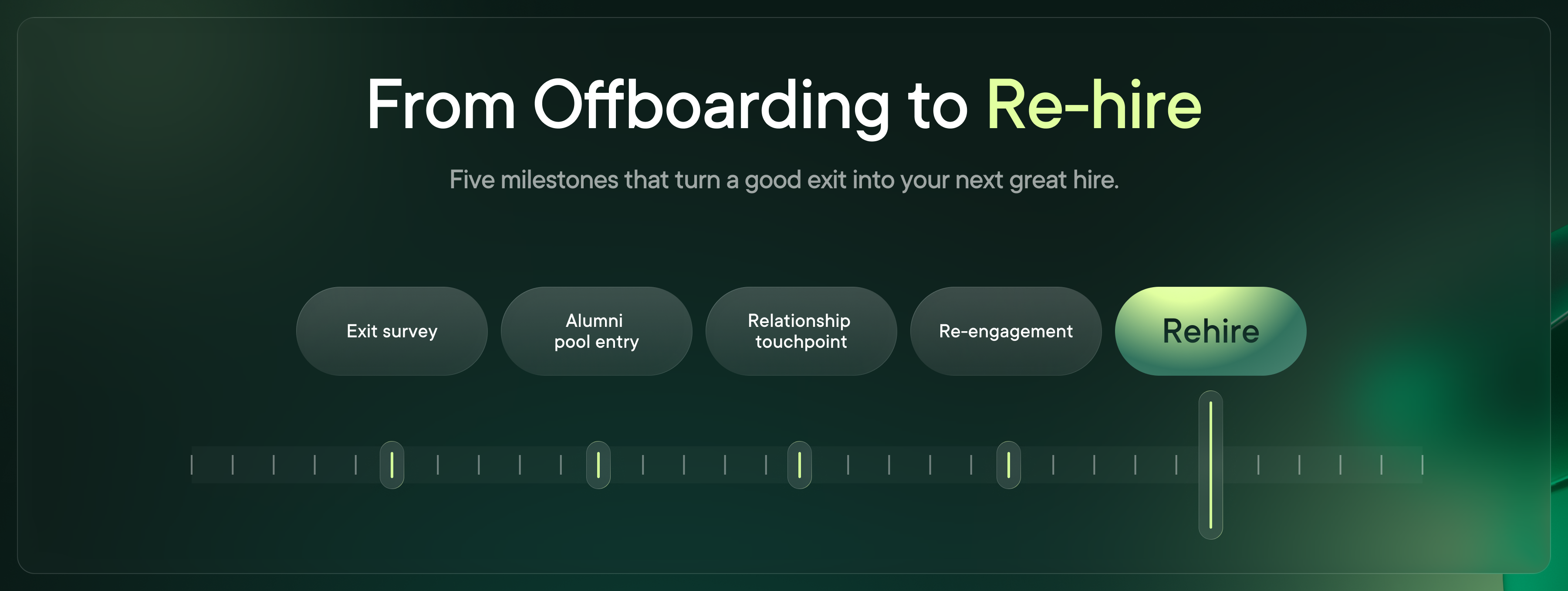
Timing matters in boomerang outreach. Reaching out too soon can feel tone-deaf. Waiting too long means the relationship cools and the opportunity passes.
A useful rule of thumb: let at least three to six months pass after departure before any re-hire conversation. Use that early period for relationship maintenance only, such as a check-in message, sharing something relevant to their career, or acknowledging a professional milestone.
When the timing feels right, be direct. Boomerang candidates appreciate transparency. A message that says "we have a role that feels like a strong fit for where you are now, would you be open to a conversation?" lands better than a vague enquiry.
Internal role-sharers and former managers are often better placed to make first contact than a recruiter. The strength of the personal relationship is usually what opens the door.
Boomerang hires do not need the same onboarding as someone brand new to the organisation, but they do need onboarding.
The mistake organisations make is assuming returning employees can simply pick up where they left off. Processes change. Teams shift. Culture evolves. A returning employee who is not properly re-onboarded can feel disoriented and disconnected, which undermines the very advantages they were hired for.
A tailored re-onboarding process for boomerang hires should cover what has changed since they left, introductions to new team members or stakeholders, and a clear conversation about expectations and how their role has evolved. It should also acknowledge their time away as an asset. What did they learn? What are they bringing back? Framing re-onboarding as a two-way exchange tends to accelerate re-integration.
You do not need a complex technology stack to start. You need three things: a structured exit process, a way to record re-hire potential, and a simple system for staying in touch.
For most organisations, the path of least resistance looks like this:
It's not complicated. The organisations that do it well are simply the ones that do it consistently.
The best talent pipelines are built before you need them. Your alumni pool is one of the few talent sources you have already invested in, people who know the business, who left on reasonable terms, and who may be ready for something new.
The exit survey is where that pipeline starts. Make it count.
Xref Exit helps you capture departing employees into a structured alumni talent pool, so when the right role opens, you know exactly who to call.
Uncover data-driven, actionable insights with automated reference, pulse and exit surveys.