



Human Resources
—
8
min read


Give your people a voice with a tailored Xref Engage survey.
Increase retention and reduce turnover with quick employee feedback from an Xref Pulse Survey.
Every departure leaves a footprint. Yet when an employee submits their resignation, many organisations fall into the same trap: relying on informal exit chats, polite feedback, or surface-level explanations.
"I found a new opportunity," "I am looking for a change," or "It is just time for something new" are common responses during an exit interview. However, these polite statements rarely reveal the underlying reasons people choose to walk away.
To build a resilient workforce and improve retention, P&C leaders need to move past standard anecdotes and start analysing exit survey data on why employees leave. When collected systematically, exit insights reveal consistent patterns across your business, giving you the precise blueprint required to stop talent drain.
Informal exit interviews are notorious for politeness. Departing team members often worry about burning bridges, securing a good reference, or maintaining professional networks. As a result, they tend to offer softened, generic feedback rather than pointing out systemic issues.
Relying solely on face-to-face exit meetings creates several blind spots:
Automated, structured exit surveys remove the tension from the process. By offering departing employees a neutral, digital space to share candid feedback, you receive honest perspectives that reflect their true reasons for leaving.
When organisations aggregate exit feedback across teams and departments, clear trends emerge. While salary and compensation are frequently cited, they are rarely the sole driver of turnover. Instead, non-monetary factors consistently dominate the data.

When you examine exit survey data on why employees leave, these core drivers consistently sit at the top of the list.
The classic phrase "people leave managers, not companies" remains grounded in reality. Direct managers shape the daily work experience, workload distribution, recognition, and psychological safety of their teams.
When exit data highlights management issues, it rarely means a manager is malicious. More often, it points to a structural gap in leadership support:
Identifying team-specific turnover patterns allows HR teams to target leadership coaching and management resources exactly where they are needed most.
High performers want to know where they are heading. When an employee feels their career has stalled, they begin looking elsewhere long before updating their resume.
Exit feedback routinely surfaces specific frustrations regarding growth:
If exit surveys consistently show that talent leaves for growth opportunities elsewhere, it is a clear sign that internal mobility pathways require immediate attention.
Burnout is rarely a sudden event; it builds up gradually over months. Exit data acts as an early warning signal for broader operational strain within specific business units.
Key operational indicators in exit data include:
Tracking these factors across exit cohorts helps P&C leaders protect remaining staff before workload pressure triggers further resignations.
A single exit survey provides a window into one individual experience. A collection of exit survey data reveals structural patterns across your organisation.
For example, if exit data indicates that 40% of sales representatives leave between their 12th and 18th months due to lack of progression, you have identified a specific structural problem that requires a targeted solution.
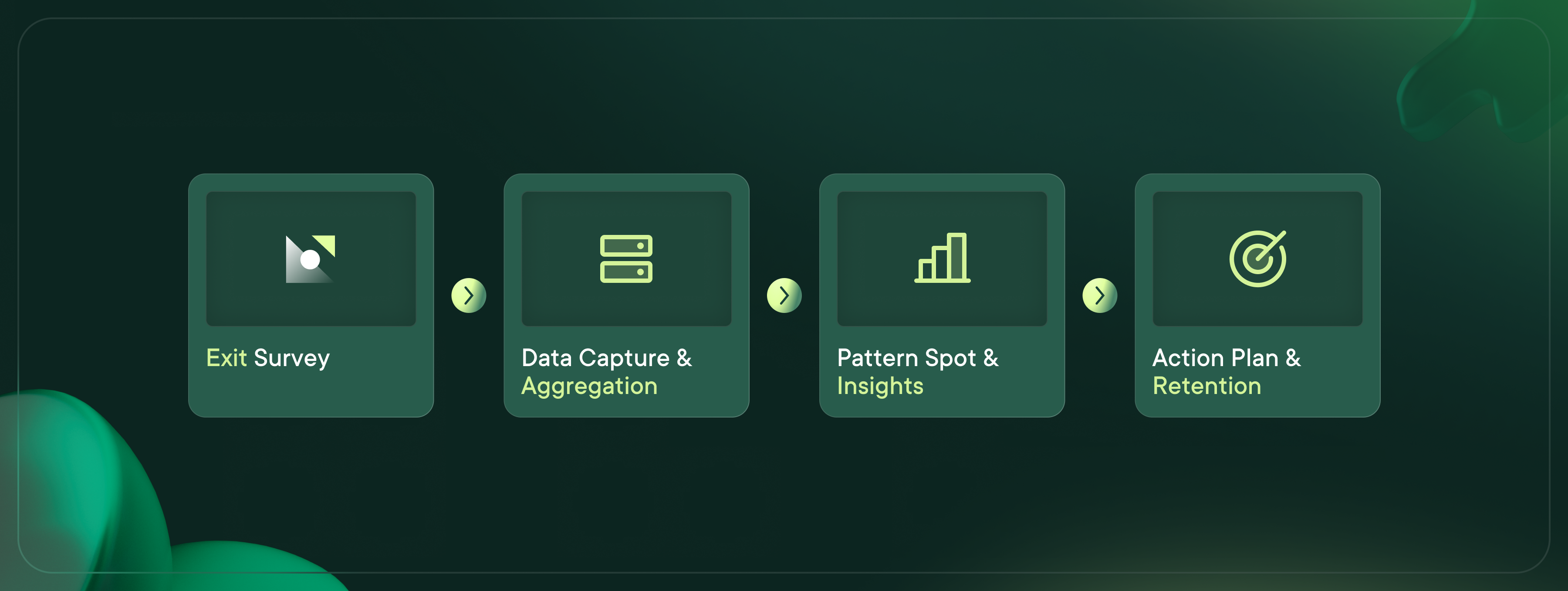
Transforming raw exit feedback into a proactive retention strategy requires a clear, repeatable framework:
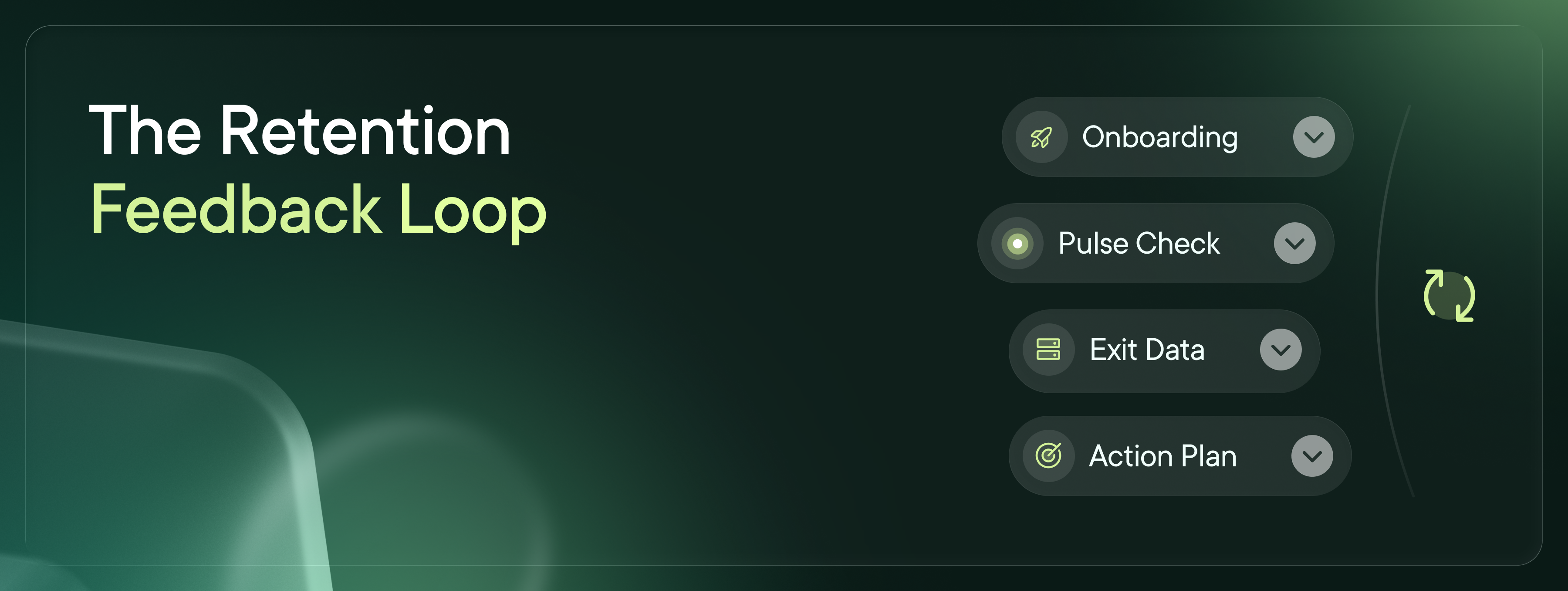
Exit data should not sit in an isolated HR folder. The most successful organisations use exit insights to inform every stage of the employee lifecycle, creating a continuous feedback loop that starts during onboarding and runs throughout the employee journey.
If exit data reveals that new hires leave within six months because job expectations were unclear, you can immediately adjust role descriptions, interview criteria, and onboarding plans.
Similarly, combining exit trends with regular pulse surveys through Xref Pulse enables you to spot warning signs among current employees long before they make the decision to walk out the door.
By capturing data at the point of departure, analysing why employees leave, and feeding those insights back into your talent strategy, you move from reactive offboarding to proactive retention.
Uncover data-driven, actionable insights with automated reference, pulse and exit surveys.