


Human Resources
—
7
min read


Give your people a voice with a tailored Xref Engage survey.
Increase retention and reduce turnover with quick employee feedback from an Xref Pulse Survey.
Someone on your hiring team spent three interview rounds convinced they had found an outstanding candidate. Ninety days into the job, that same person cannot do half of what their CV promised. HR professionals now have a term for this frustrating disconnect: skillfishing.
SHRM's chief knowledge officer, Alexander Alonso, named the term in April 2026 to describe candidates who present skills, credentials or capabilities that never translate into real execution once they are in the seat. Within a month, HR Dive was writing about it too, and SHRM has kept running sessions on the topic through the second half of 2026. Organisations that learn to spot this issue early gain a distinct advantage over those relying solely on standard interview panels.
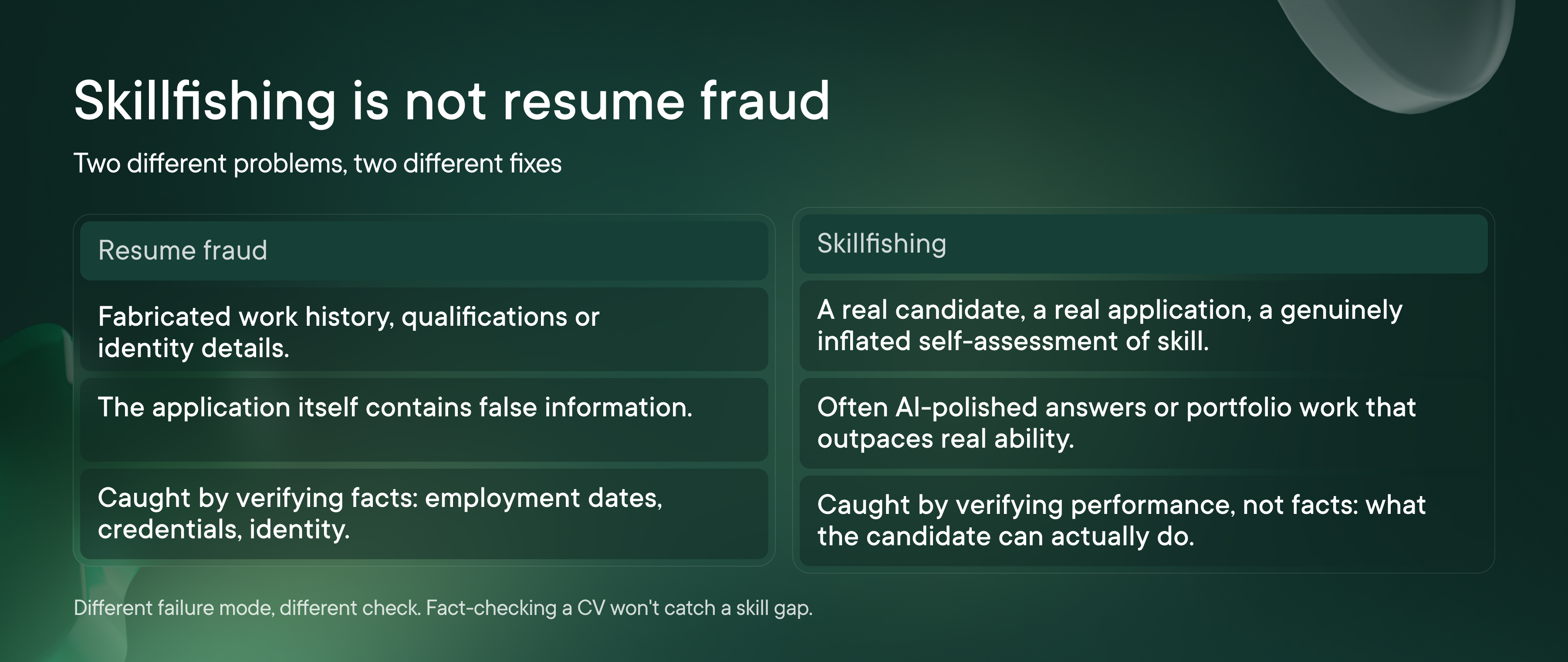
Skillfishing is not resume fraud. Candidates are not lying about previous employers or inventing qualifications, which remains a separate, already well-documented problem. Skillfishing is far subtler and much harder to catch because no part of the application is fabricated. A real candidate submits an authentic application for a role they genuinely believe they can perform. Their own assessment of their skill level turns out to be exaggerated.
SHRM describes the phenomenon as an old issue gaining new complexity in the age of AI. While overstating personal ability during a job search is a long-standing habit, technology has changed the equation. The effort required to look capable has dropped to near zero, causing the gap between presentation and actual performance to widen significantly. SHRM notes this pattern appears most frequently among entry-level applicants, though the challenge is certainly not confined to junior roles.
Ask HR leaders how they plan to address skillfishing and you will hear a consistent list of tactics. Teams are scrutinising applications that mirror job ads too closely, returning to in-person panel interviews, and adding 30 to 60 minute skills assessments before issuing offers. SHRM recommends most of these steps directly. HR Dive's list overlaps heavily, combining stricter interview protocols and skills-verification questions with situational mini-cases, increased in-person interaction, and cautious use of probationary periods with clear evaluation checkpoints.
A skillfished candidate can navigate these hurdles without much difficulty. They rehearse polished answers to predictable interview questions. They submit portfolio work refined by AI design or writing tools beyond their solo capabilities. When sitting a skills test, they only need to perform a single isolated task on a day they know they are being evaluated. The traditional red flags associated with application fraud simply do not trigger here. Performing well for an hour during a test is entirely different from delivering consistent results over a full year.
Every one of these risk mitigation steps is logical and well-intentioned. However, the underlying measurement criteria remain unchanged. A panel interview evaluates how well someone handles a panel interview. A timed test measures performance under exam conditions. Even a carefully structured probationary period remains an artificial evaluation window that the candidate knows is actively running.
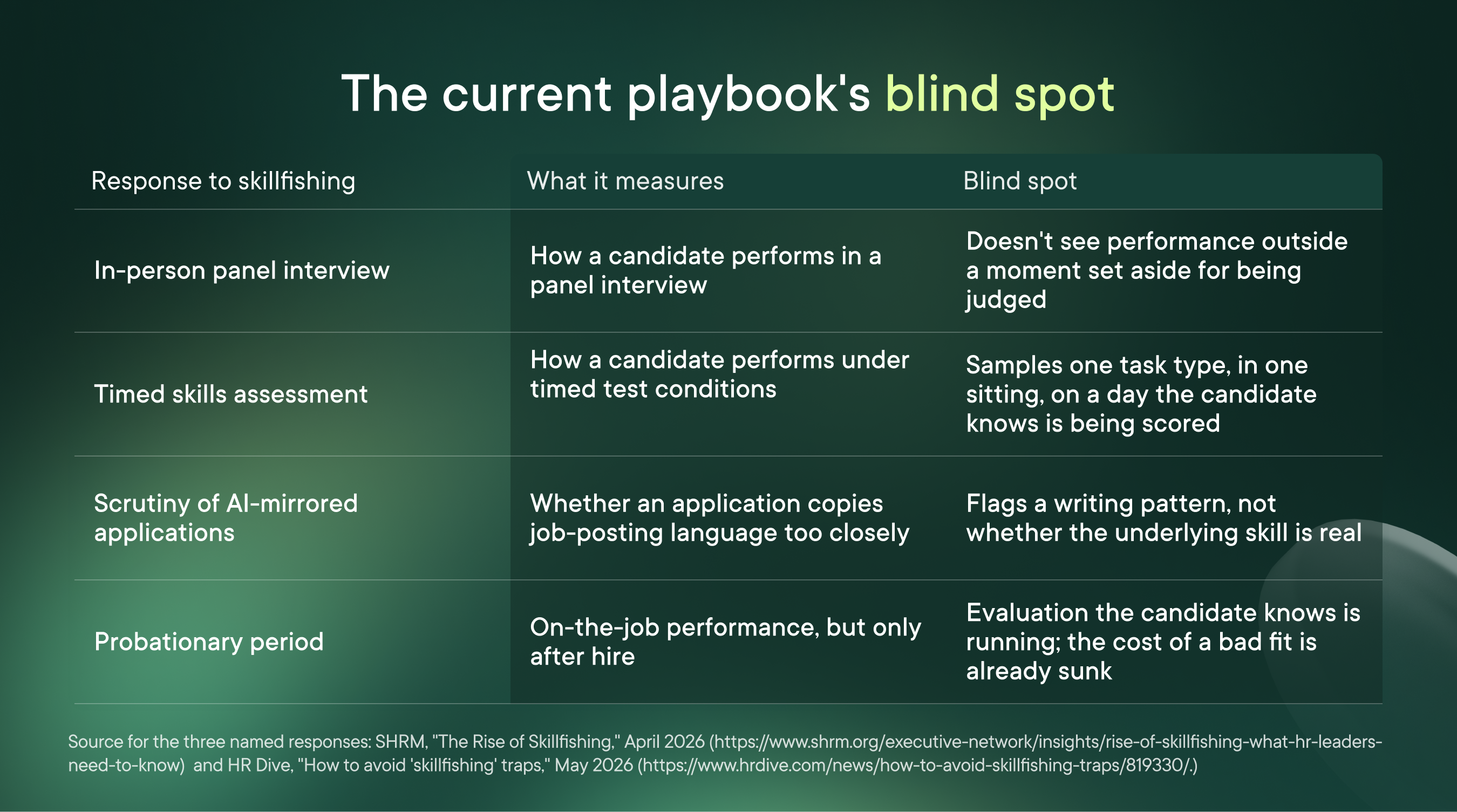
Panel interviews, skills tests, and application reviews all share a fundamental limitation. They capture a candidate's behaviour within a brief, controlled window. Hiring teams then use that limited snapshot to predict the outcome of a multi-year working relationship.
HR Dive refers to this broader shift as an explosion of convenience that has made recruitment systematically harder. They flag it as an ongoing volume issue rather than a temporary spike. If that assessment holds true and the incentive to skillfish grows alongside advancing AI tools, hiring processes built around short-term evaluations will struggle to solve the problem. Finer interview questions and tougher skills tests cannot bridge the gap on their own. Hiring teams need objective evidence that does not rely on a candidate's live performance in front of an evaluator.
That objective evidence source already exists in most hiring processes, though it is usually treated as an administrative formality completed after the hiring decision is made.
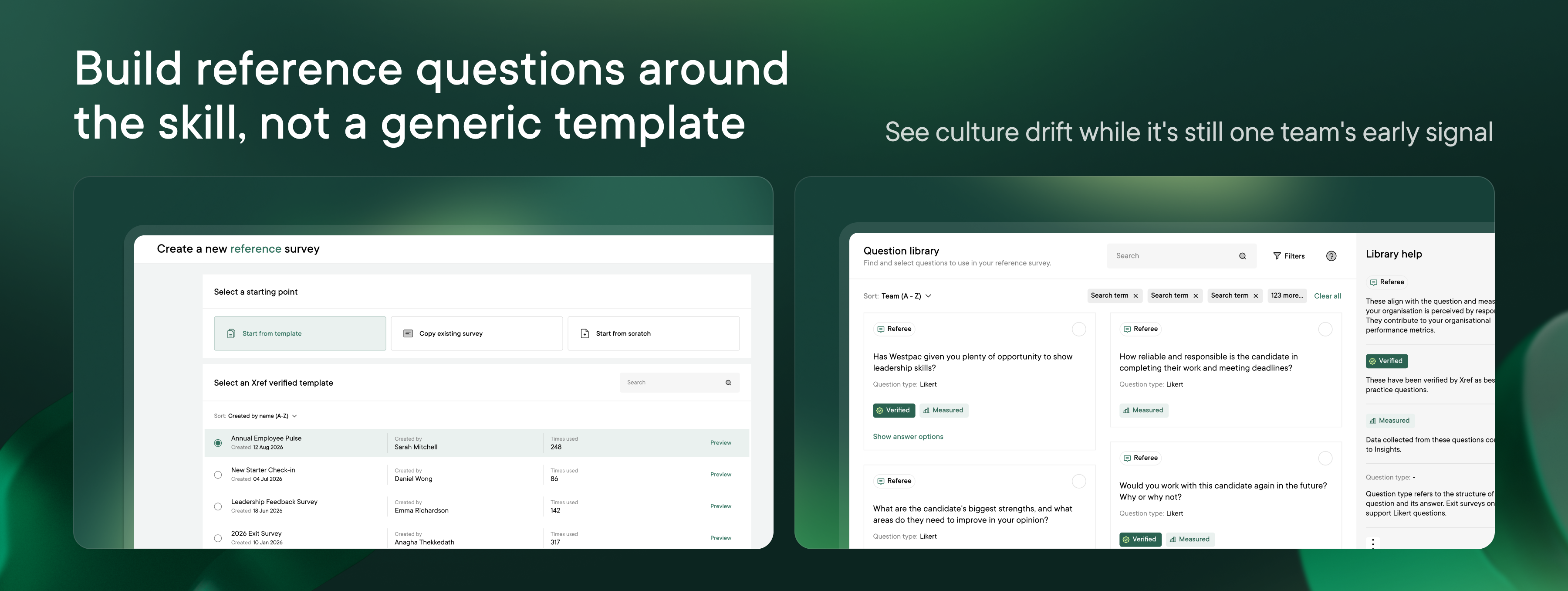
A structured reference check moves past general impressions to evaluate specific, role-relevant competencies. Rather than asking a referee if they would rehire someone, the process gathers targeted feedback on practical capabilities. Xref's reference checking tool provides quantified feedback measuring named skills and competencies, alongside sentiment analysis on what referees actually wrote, with responses returned in an average of 18 hours. This data reflects actual past performance gathered from colleagues who worked directly with the candidate and have no reason to embellish their feedback.
Selecting the right competencies to evaluate is just as crucial as conducting the check itself. Xref's Survey Builder provides persona presets that tailor questions to match how a referee actually observed the candidate at work. It also includes a recommendation engine that suggests relevant questions based on the hiring team's core priorities. This structure ensures the reference check evaluates the specific skills required for the role rather than collecting a generic character reference.
To protect your organisation from skillfishing, focus on three practical structural adjustments rather than adding more interview rounds:
These changes are not meant to replace interviews or technical assessments. Instead, they provide the context that isolated evaluations miss.
In six months, candidates who rely on skillfishing will become operational challenges for the companies that hired them. The organisations that avoid this trap will be those that gathered direct feedback from past colleagues before extending an offer, rather than waiting for probation checks to reveal the truth.
Xref's reference checking helps hiring teams quickly and simply gather critical insight early in the recruitment process. Book a demo to see how automated reference checks build verification into your hiring workflow.
Uncover data-driven, actionable insights with automated reference, pulse and exit surveys.