



Human Resources
—
8
min read


Give your people a voice with a tailored Xref Engage survey.
Increase retention and reduce turnover with quick employee feedback from an Xref Pulse Survey.
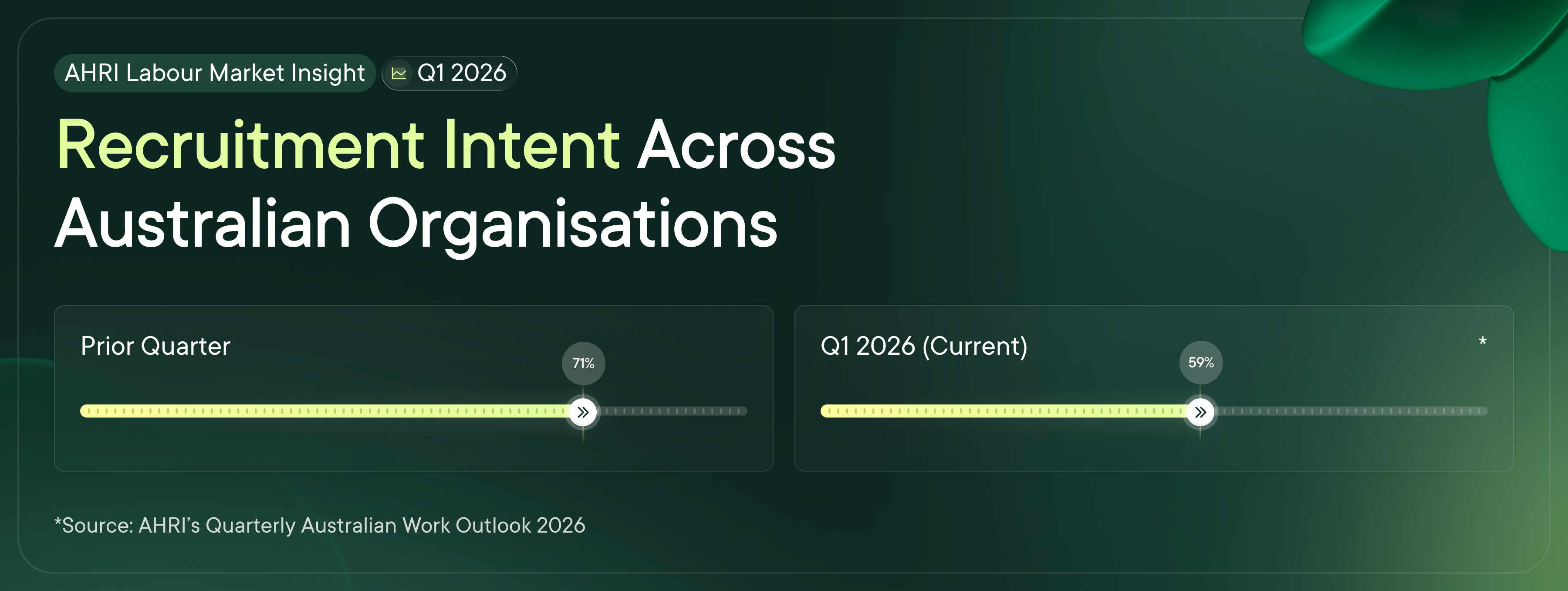
Precision hiring is redefining how Australian organisations build their teams. Australian Hiring and Development Index data from the Australian HR Institute (AHRI) shows that only 59 per cent of Australian organisations planned to recruit in the first quarter of 2026, down from 71 per cent in the previous quarter. The market has shifted away from high-volume recruitment to deliberate, high-value individual placements.
When hiring slows, every open role carries more weight. Organisations can no longer afford to absorb the cost of a mis-hire, nor can they spend months fixing a poor placement. This context makes pre-hire verification and precision hiring 2026 Australia strategies critical for HR leaders, business owners, and People and Culture managers across small and medium-sized enterprises (SMEs).
The broader economic environment in Australia has forced businesses to be far more strategic with headcount. Rather than expanding teams rapidly, companies are focusing on capability, productivity, and retention.
When recruitment volumes decrease, the dynamic inside your business changes:
Volume hiring relied on casting a wide net, filling roles fast, and managing turnover after the fact. Precision hiring operates on the opposite principle: taking a targeted, data-backed approach to ensure the right candidate enters the role the first time.
Precision hiring shifts the focus from speed-to-hire to quality-of-hire. It treats recruitment as a risk management process and an investment strategy. In practice, this requires a clear framework that reduces guesswork at every stage of the recruitment funnel.
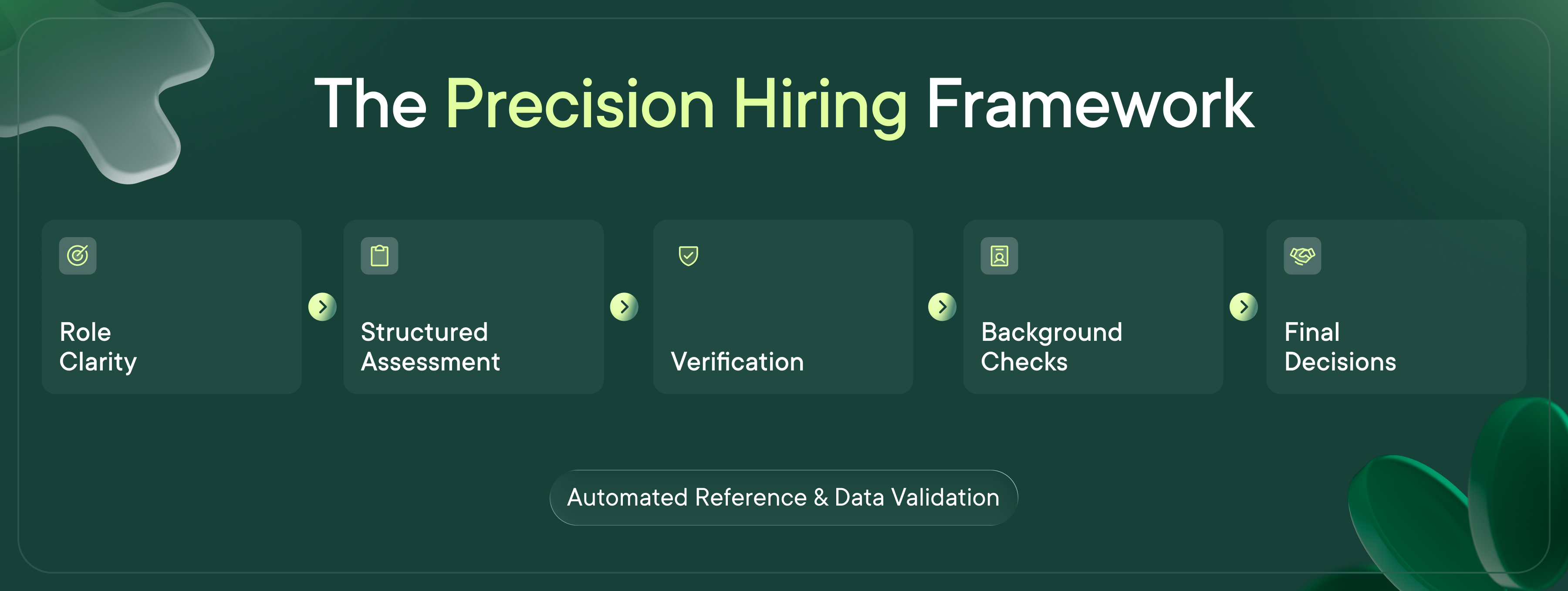
Adopting a precision hiring framework requires discipline at each step of the candidate evaluation journey.
Before listing a job, you must define the exact performance outcomes required for the role, not just a generic list of responsibilities. Clear alignment on competencies between line managers and HR prevents misaligned candidate evaluations later in the funnel.
Unstructured interviews are notoriously unreliable indicators of on-the-job performance. Precision hiring relies on structured interview questions directly mapped to the defined core competencies of the role.
Verification should not be a hasty compliance tick at the end of the process. Up to 75 per cent of HR professionals have identified misrepresentations on resumes. Verifying candidate credentials, past performance, and history must be integrated deliberately into the decision-making pipeline.
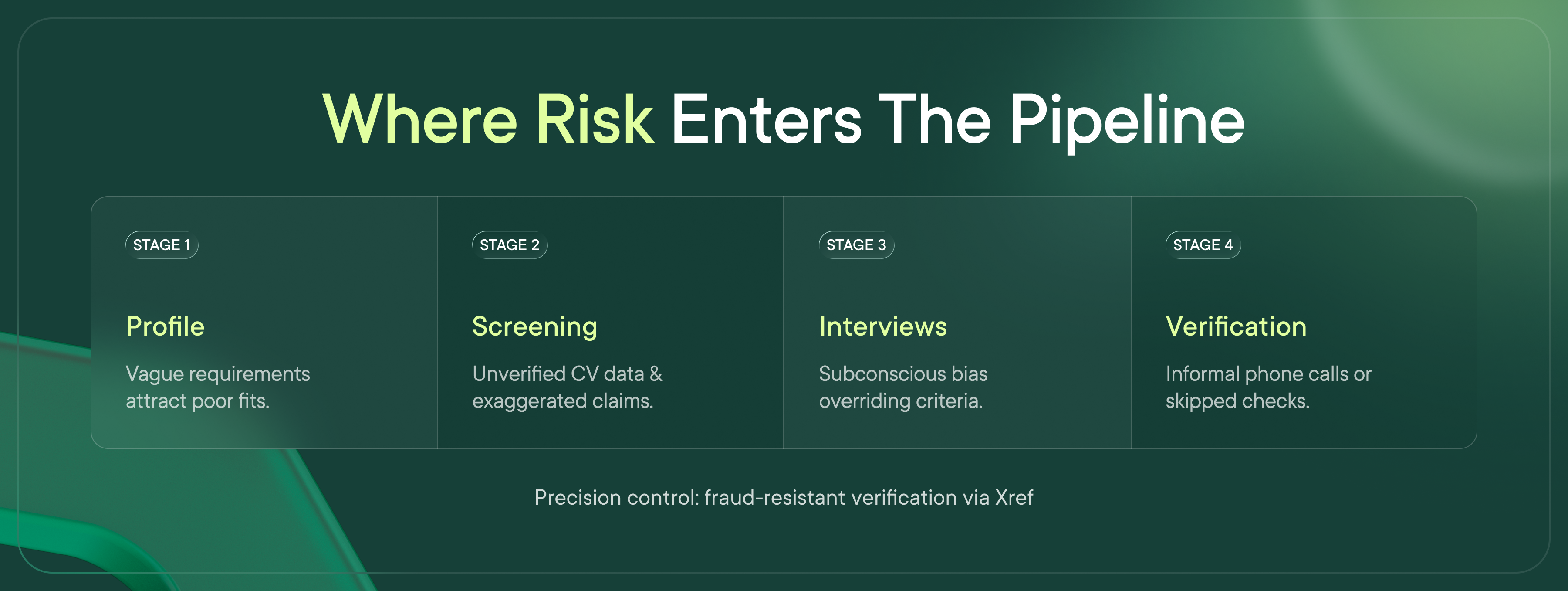
Risk typically enters the hiring pipeline across four distinct stages:
Addressing these vulnerability points is essential for maintaining hiring accuracy across SMEs and mid-market organisations.
Reference checks are one of the most effective ways to validate a candidate's actual work performance, communication style, and cultural suitability. However, traditional manual phone calls often yield superficial feedback, take days to arrange, and carry security risks.
Automated platforms like Xref Reference streamline and elevate this stage of the hiring process:
Approximately 1 in 5 candidates are flagged during reference checks, and 3 per cent of references are confirmed fraudulent. Without structured verification tools, these risks often pass directly into your business undetected.
Even with strong processes, mis-hires occasionally happen. When they do, precision hiring principles require a fast feedback loop to protect the business and prevent repeated errors.
When a placement fails to perform as expected, evaluate where the breakdown occurred:
By combining thorough exit feedback via solutions like Xref Exit with refined pre-hire checks, organisations continuously strengthen their recruitment security.
In a year where every headcount decision carries strategic weight, precision hiring is your best defence against costly recruitment mistakes.
Start making deliberate, verified hiring decisions today. Claim your free trial of Xref Reference to protect your team and streamline your verification process.
Uncover data-driven, actionable insights with automated reference, pulse and exit surveys.