



Human Resources
—
8
min read

Give your people a voice with a tailored Xref Engage survey.
Increase retention and reduce turnover with quick employee feedback from an Xref Pulse Survey.
When a reference check stalls, it is rarely because a referee refuses to respond. It is because nobody told them, clearly and early, what to expect.For HR managers and talent acquisition teams, completion rate is one of the few reference checking metrics that actually reflects candidate and referee experience. A high drop off rate is rarely just a technology problem. It is usually a briefing problem, and it is one you can fix without changing your process at all.
For HR managers and talent acquisition teams, completion rate is one of the few reference checking metrics that actually reflects candidate and referee experience. A high drop off rate is rarely just a technology problem. It is usually a briefing problem, and it is one you can fix without changing your process at all.
Completion rates are shaped by three things: how well the candidate understood what was coming, how easy the referee's task is, and how much follow up is required to get there. Two of those three are entirely within your control before a single reference request is sent.
Organisations that brief candidates properly before submitting referee details tend to see faster turnaround and fewer stalled requests. Organisations that skip that step often end up chasing referees manually, which slows everything down and creates a worse experience for everyone involved.
Once a candidate adds their referee's details, the process becomes largely automated. An invitation goes out, the referee completes their response in their own time, and the system tracks progress without requiring manual follow up from your team.
That said, candidates rarely see this part of the process. From their perspective, they submit some names and then wait. If they do not know what happens next, they cannot help move it along, and they are more likely to contact you asking for updates instead of prompting their referee directly.

A referee typically receives a short, clear invitation explaining who has nominated them, what the request involves, and roughly how long it will take. From there, they move into a simple online survey, usually completed in a matter of minutes rather than a phone call scheduled days in advance.
A few things matter here:
When digital reference checking is used well, responses can come back in as little as 18 to 24 hours, compared with the days it can take when everything relies on manual phone tag.
Even with automation doing the heavy lifting, a few recurring issues account for most delays:
Most of these are preventable with a short, well timed briefing conversation before the process even starts.

A good candidate briefing takes two minutes and pays off across the entire reference cycle. Before submitting referee details, walk candidates through:
Candidates who understand this upfront are far more likely to choose responsive referees and prompt them personally, which is often the single biggest driver of a fast completion.
There is no universal benchmark that applies to every organisation or industry, but a well briefed candidate process should see the majority of referees respond within the first one to two days of invitation, with automated reminders picking up the remainder without manual intervention from your team.
If your team is regularly chasing referees by phone or email, that is a signal the briefing step, not the technology, needs attention.
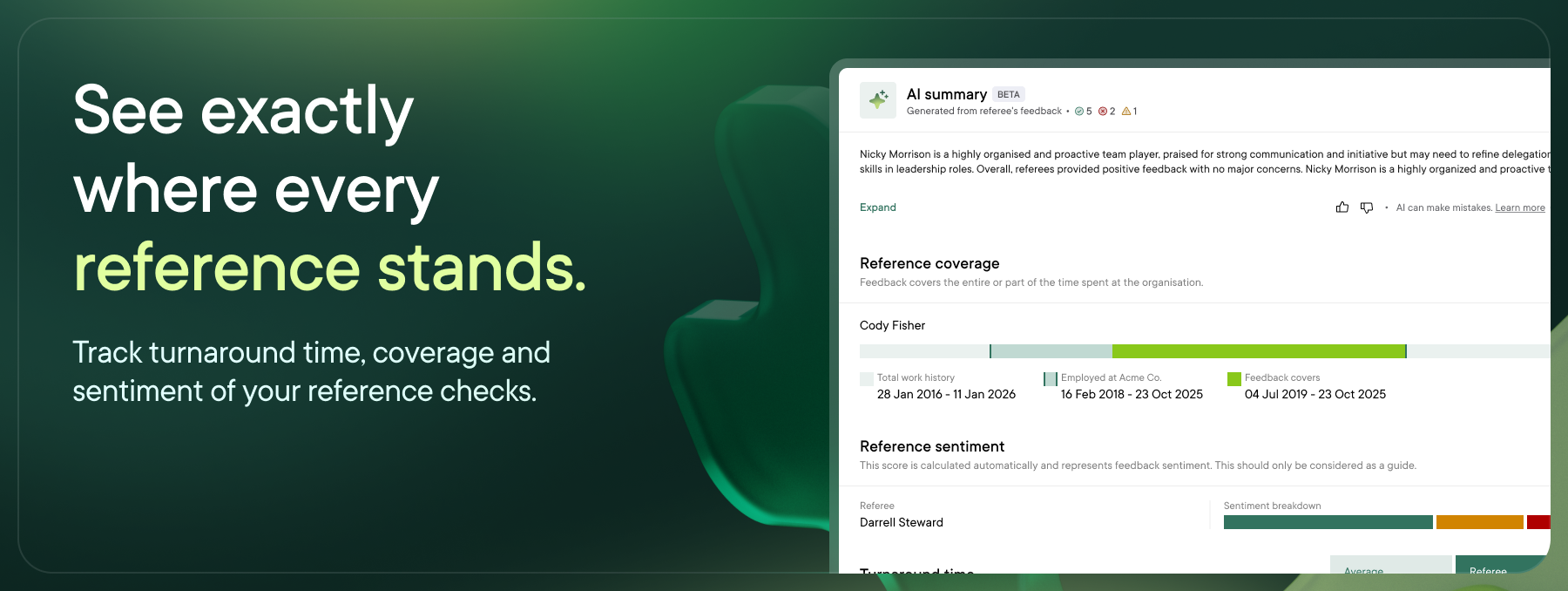
The real value of automated reference checking is not just speed. It is visibility. Instead of wondering whether a referee has responded, your team can see exactly where each request sits, which referees have completed their survey, which are outstanding, and where automated reminders have already been sent.
That visibility does two things. It removes the manual chasing that eats into recruiter time, and it gives you a clear, real time view of where each candidate sits in the process without a single follow up email.
Getting candidate experience right is not a soft metric. It is the difference between a reference check that completes in a day and one that drags on for a week. A clear briefing, a simple referee experience, and visibility over the process are what actually move completion rates, and Xref Reference is built to support all three.
Ready to see how a faster, better briefed reference process could work for your team? Explore Xref Reference
Uncover data-driven, actionable insights with automated reference, pulse and exit surveys.