


Human Resources
—
8
min read


Give your people a voice with a tailored Xref Engage survey.
Increase retention and reduce turnover with quick employee feedback from an Xref Pulse Survey.
Every graduate hired this year is doing the work that two or three would have shared before AI took the load off the bottom of the org chart. That is not a hypothetical squeeze. It is happening at the same time entry-level hiring itself is shrinking, which means each of those hires now carries more institutional weight than the same role did two years ago.
Gartner's own talent-management research names the mechanism directly: AI has become a viable substitute for lower-value work, entry-level hiring has declined as a result, and organisations are leaning harder on mid-level talent instead. The same release, drawn from a 2Q25 survey of 919 employees aged 22 to 27, found that Gen Z workers value job mobility over job security and are leaving their organisations "at an alarming rate". Fewer entry-level seats, filled by the cohort least inclined to stay in one: that is the maths most coverage of this trend stops short of doing.
Tony Guadagni, Director, Research in Gartner's HR practice, names this as one of four trends talent-management leaders need to prepare for in 2026. It reads, on its face, as a labour-market story, and most coverage of it stops there.
A May 2026 survey of 1,000 US hiring managers, fielded by Pollfish for a graduate-hiring report, puts numbers to how far the shift has already gone inside real hiring budgets. Forty-eight per cent would rather invest in AI tools than hire and train a recent graduate. Fifty-five per cent have shifted at least part of their entry-level hiring budget to AI, and more than a quarter have shifted it completely. Twenty-three per cent plan to hire fewer 2026 graduates than last year, or none at all. It is US-specific data, not a global figure, but it shows Gartner's mechanism already playing out inside real hiring decisions.
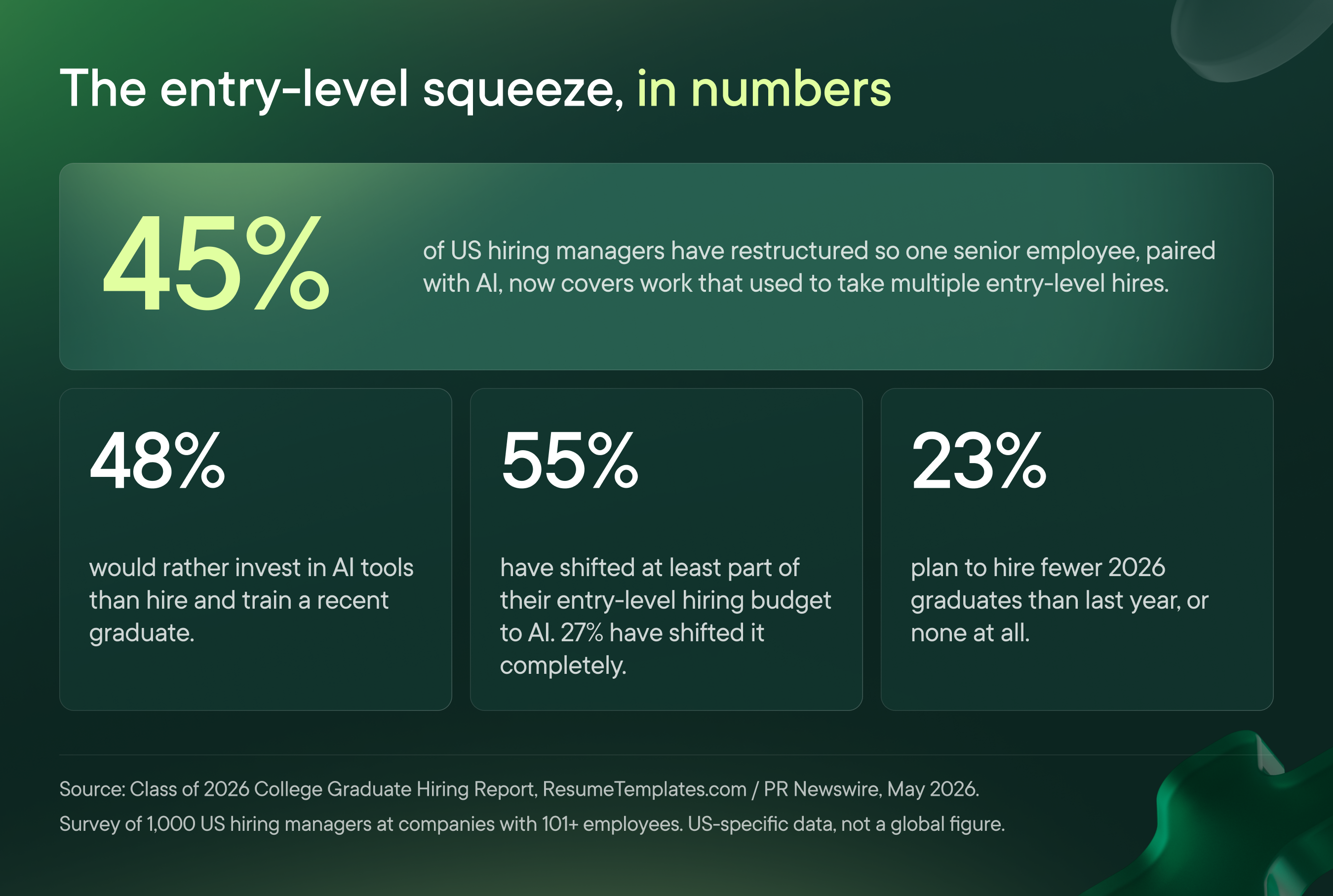
Forty-five per cent of the same hiring managers say they have restructured roles so a single senior employee, paired with AI, now covers work that used to take several entry-level hires. That restructuring is the part of the story that changes the retention question. When one graduate is doing the job three used to share, losing that graduate is no longer a hiring-pipeline inconvenience. It is a capacity problem with no backup.
When 45% of teams restructure this way, the team chart tells the real story. One senior employee is doing the work that two or three graduates used to split between them. Recruiting teams have spent the past two years talking about scarcity, harder-to-fill roles, longer time-to-hire, and tighter budgets, as if the risk ends the moment an offer gets accepted. It does not. A graduate hired into a role that used to be shared across several people inherits more of the institutional knowledge that role now holds, and takes more of it with them if they leave.
Standard retention playbooks fail to treat this as a distinct risk category. Early-career attrition gets folded into whatever the organisation's overall turnover figure says, averaged against tenured departures that carry a completely different cost profile. A restructured, AI-augmented entry-level role is a different kind of loss than a senior one, and a dashboard that treats them the same hides exactly the pattern that matters most right now.
There is also a timing problem underneath the cost problem. A graduate who has spent months learning the parts of a role that used to belong to two or three separate people takes longer to replace than the same role did before it was consolidated, precisely because there is more to hand over and fewer people left who already know how to cover it. Replacing them is no longer a like-for-like backfill, given it requires rebuilding a small piece of institutional memory from nothing, on a shorter runway than the organisation had when that memory was still spread across a wider team.
Ask most HR teams how they currently find out why an early-career employee left, and the honest answer is a manager debrief, if that: an informal conversation, rarely run the same way twice, filed nowhere an analyst could later query for a pattern. Compare that with what a senior, tenured departure usually triggers: a formal exit process, sometimes a counter-offer conversation, occasionally a structured handover. The organisation puts more process around the departure it can least afford to repeat, and less around the one that, per the restructuring data above, now carries outsized weight anyway.
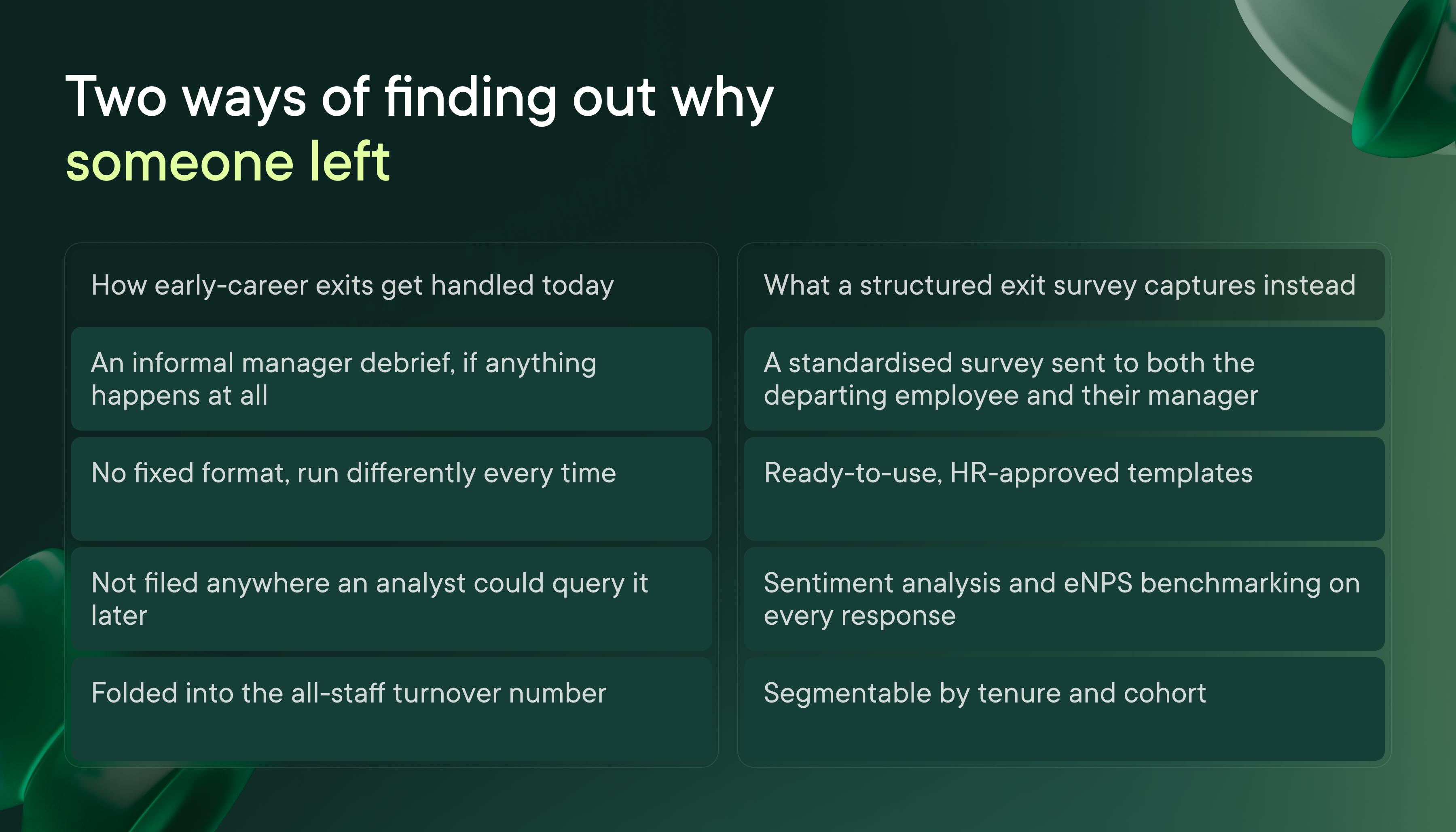
HR has simply not been advised that early-career attrition deserves its own dedicated signal, so no system was built. The reasons a graduate actually leaves (pay, management quality, lack of growth, or the type of work AI has left them doing) get guessed at rather than measured.
What would actually close that gap? Xref's Exit Surveys exist for it: a structured survey that can be bulk-sent to up to 5,000 employees at a time, in multiple languages, with separate HR-approved templates for the departing employee and their manager, turning an ad hoc conversation into comparable data. Attrition drivers get identified rather than assumed. Results benchmark via Net Promoter Score (NPS) tracking instead of sitting as an isolated anecdote. Automated sentiment analysis on open-text responses surfaces patterns a single manager reading one exit form would never catch across a whole cohort.
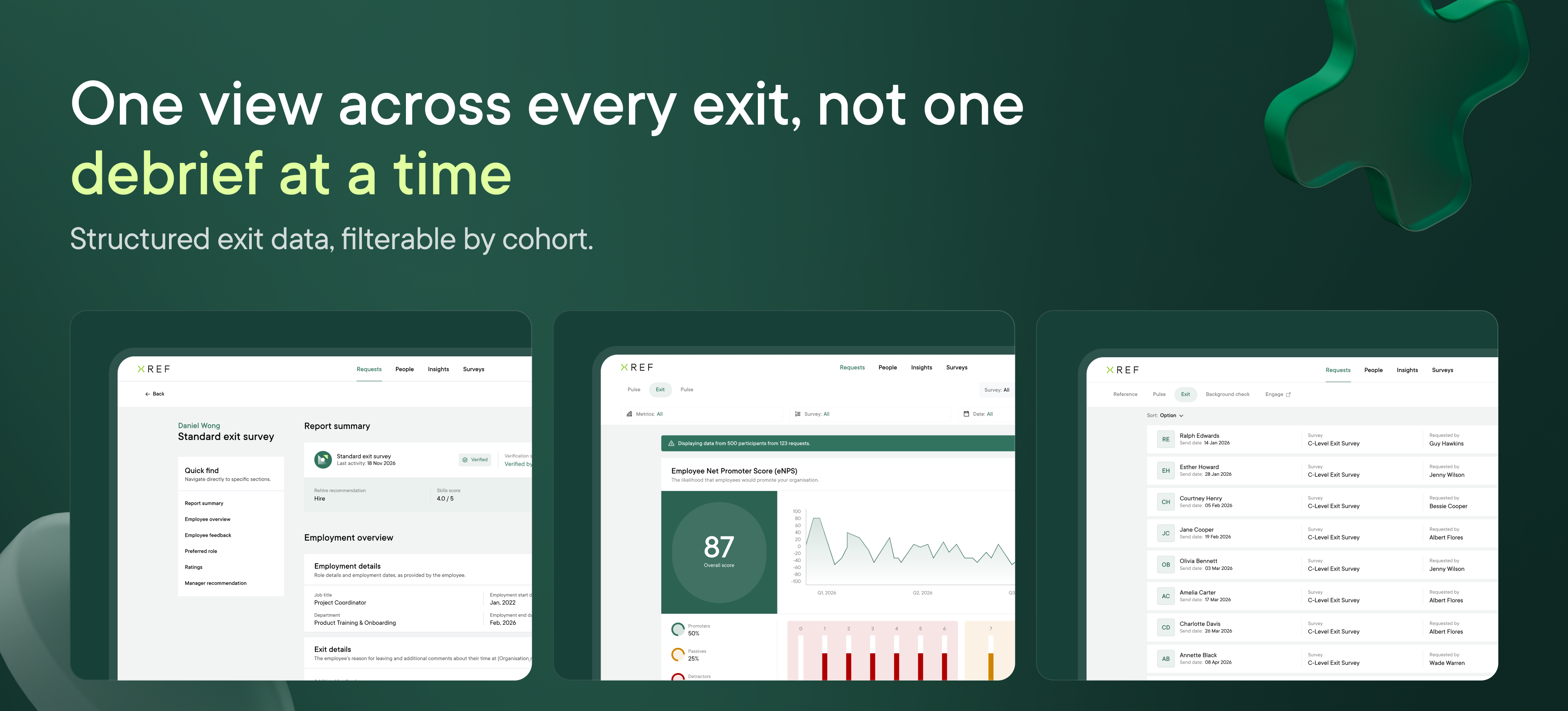
None of this needs a new tool bought specifically for one cohort. It needs the data an organisation already collects segmented by tenure, so early-career attrition stops being averaged into a headline turnover figure and starts showing its own pattern: whether it clusters around a specific manager, a specific type of restructured role, or a specific point in someone's first year.
That last point matters immensely. A graduate who leaves in month two is telling the organisation something different from one who leaves at month ten, and a system that only ever produces one blended annual attrition number cannot tell those two stories apart. Segmented, structured exit data can, which makes the difference between a vague sense that "the grads keep leaving" and a specific, actionable answer to when and why.
An exit survey with a rehire-interest question attached does something else too. It keeps a searchable People Records entry on the graduate an organisation just lost: their role, skills, competencies, and contact details, in case the same calculation that made them expensive to lose also makes them worth trying to get back. Xref has already published the deeper guide on running that relationship properly: building a boomerang hiring programme from your alumni network is the next read once the exit data itself is in place.
Two changes fit inside a single quarter, without waiting on a bigger workforce-planning cycle:
Organisations chasing this story are still asking how to win the fight for scarce graduate talent. A more useful question is why the graduates already hired keep leaving, and whether anyone would actually know if the answer changed next quarter. Talk to Xref's team about Exit Surveys before the next cohort walks out without anyone finding out why.
Uncover data-driven, actionable insights with automated reference, pulse and exit surveys.